How Much Does It Cost to Become a CPA in the Philippines? Complete 2026 Breakdown
Becoming a Certified Public Accountant (CPA) in the Philippines is one of the most strategic career investments you can make. But before you embark on this journey, it's crucial to understand the full financial picture—from your first day in college to the moment you receive your PRC license.
In this comprehensive guide, we break down every expense you'll encounter on your path to becoming a CPA in 2026, helping you plan your budget and maximize your investment.
The CPA Journey: A Financial Overview
The total cost of becoming a CPA varies dramatically based on your choices. Here's what you need to budget for:
- Bachelor of Science in Accountancy (BSA) degree
- CPA board exam review
- PRC examination and licensing fees
- Study materials and books
- Living expenses during the review period
Let's examine each component in detail.
1. BSA Tuition Fees: The Biggest Investment
Your choice of university represents the largest portion of your CPA journey expenses. Here's what you can expect in 2026:
Public Universities (State Universities and Colleges)
Cost: FREE (under RA 10931)
Thanks to the Universal Access to Quality Tertiary Education Act (RA 10931), tuition and miscellaneous fees at state universities and colleges (SUCs) are now free. This includes prestigious institutions like:
- Polytechnic University of the Philippines (PUP)
- University of the Philippines (UP)
- Technological University of the Philippines (TUP)
- Bulacan State University (BulSU)
- Batangas State University (BatStateU)
What you'll still pay for:
- Books and supplies: PHP 5,000–10,000/year
- Transportation and meals
- Organization fees and other personal expenses
Total 5-year estimate: PHP 50,000–100,000 (personal expenses only)
Private Universities (Mid-Range)
Cost: PHP 300,000–650,000 for 5 years
Mid-range private institutions offer quality education at reasonable rates. Examples include:
- San Sebastian College
- Centro Escolar University
- University of the East
- Far Eastern University (regional campuses)
- Arellano University
Typical per-semester breakdown:
- Tuition: PHP 25,000–50,000
- Miscellaneous fees: PHP 5,000–15,000
- Laboratory fees: PHP 2,000–5,000
Premium Private Universities
Cost: PHP 1,000,000–1,300,000 for 5 years
Top-tier institutions command premium prices but often boast higher board exam passing rates and stronger industry connections:
- De La Salle University
- Ateneo de Manila University
- University of Santo Tomas
- University of Asia and the Pacific
- San Beda University
What you get for the premium:
- Smaller class sizes
- Industry partnerships and internship programs
- Access to extensive alumni networks
- Modern facilities and resources
- Higher historical board passing rates
2. CPA Review Center Fees
After graduating, most aspiring CPAs enroll in review centers to prepare for the board exam. This is a critical investment that significantly impacts your chances of passing.
Review Center Cost Range
| Type | Cost Range | Duration |
|---|---|---|
| Budget/Provincial | PHP 8,000–12,000 | 3–4 months |
| Standard Metro Manila | PHP 12,000–16,000 | 4–5 months |
| Premium/Intensive | PHP 16,000–20,000 | 5–6 months |
What's Typically Included:
- Lecture sessions (in-person or online)
- Review materials and handouts
- Mock examinations
- Access to question banks
- Tutorial sessions
Popular Review Centers (2026):
- ReSA (Review School of Accountancy)
- CRC-ACE (CRC Ace Review School)
- PRTC (Professional Review and Training Center)
- Pinnacle Review School
- Excel Review Center
Online vs. In-Person Review
Online Review Programs: PHP 5,000–12,000
- Flexible scheduling
- Lower cost
- Self-paced learning
- Ideal for working reviewees
In-Person Review: PHP 12,000–20,000
- Structured environment
- Direct interaction with lecturers
- Peer study groups
- Better accountability
3. PRC Examination and Licensing Fees
The Professional Regulation Commission (PRC) charges various fees throughout the licensing process:
First-Time Examinees
| Fee Type | Amount |
|---|---|
| Application/Examination Fee | PHP 900 |
| Documentary Stamp | PHP 21 |
| Initial Registration (after passing) | PHP 600 |
| Professional ID | PHP 450 |
| Metered Mailing Envelope | PHP 30 |
| Total for First-Timers | PHP 2,001 |
Re-Takers
| Fee Type | Amount |
|---|---|
| Application Fee (Complete Retake) | PHP 900 |
| Application Fee (Conditional/Removal) | PHP 450 |
| Documentary Stamp | PHP 21 |
| Metered Mailing Envelope | PHP 30 |
| Total per Complete Retake | PHP 951 |
| Total per Removal Exam | PHP 501 |
Additional PRC Costs:
- NSO/PSA Birth Certificate: PHP 155–365
- Transcript of Records: PHP 200–500 (varies by school)
- NBI Clearance: PHP 155
- 2x2 and passport-size photos: PHP 100–200
4. Books and Study Materials
Quality study materials are essential for both your BSA degree and board exam review.
During College (5 years)
| Material Type | Annual Cost | 5-Year Total |
|---|---|---|
| Textbooks | PHP 3,000–5,000 | PHP 15,000–25,000 |
| Accounting Standards Updates | PHP 500–1,000 | PHP 2,500–5,000 |
| Calculator (PRC-approved, e.g. Casio FX-570ES Plus) | One-time PHP 1,500–2,000 | PHP 1,500–2,000 |
For Board Exam Review
| Material Type | Cost |
|---|---|
| Review center materials | Usually included in review fee |
| Supplementary books | PHP 2,000–5,000 |
| Online question banks | PHP 1,000–3,000 |
| Practice exam sets | PHP 500–1,500 |
Total Books/Materials Estimate: PHP 15,000–25,000
5. Living Expenses During Review Period
For provincial students reviewing in Metro Manila, living expenses represent a significant additional cost.
Monthly Living Expenses in Metro Manila (2026)
| Expense | Budget | Moderate | Comfortable |
|---|---|---|---|
| Boarding house/Bedspace | PHP 3,000–4,500 | PHP 5,000–7,000 | PHP 8,000–12,000 |
| Food | PHP 4,000–5,000 | PHP 6,000–8,000 | PHP 10,000–15,000 |
| Transportation | PHP 1,500–2,000 | PHP 2,500–3,500 | PHP 4,000–6,000 |
| Utilities/Internet | PHP 500–1,000 | PHP 1,000–1,500 | PHP 1,500–2,500 |
| Miscellaneous | PHP 1,000–1,500 | PHP 2,000–3,000 | PHP 3,000–5,000 |
| Monthly Total | PHP 10,000–14,000 | PHP 16,500–23,000 | PHP 26,500–40,500 |
5-Month Review Period Total
| Budget Level | Total Living Expenses |
|---|---|
| Budget | PHP 50,000–70,000 |
| Moderate | PHP 82,500–115,000 |
| Comfortable | PHP 132,500–202,500 |
Pro tip: Students from the provinces can significantly reduce costs by:
- Staying with relatives in Metro Manila
- Enrolling in provincial review centers
- Opting for online review programs
Preparing for the CPALE?
When you start reviewing, the AI tutor and full question bank are free for seven days — no card.
Total Cost Scenarios: What Will You Actually Spend?
Let's put it all together with three realistic scenarios:
Scenario 1: Budget Path
Profile: Public university graduate, provincial review center, stays with family
| Expense | Amount |
|---|---|
| BSA (Public University) | PHP 50,000–100,000 |
| Review Center (Provincial) | PHP 8,000–12,000 |
| PRC Fees | PHP 2,000 |
| Books & Materials | PHP 15,000–20,000 |
| Living Expenses | PHP 25,000–38,000 |
| TOTAL | PHP 100,000–170,000 |
Scenario 2: Mid-Range Path
Profile: Mid-range private university, standard Metro Manila review, bedspace accommodation
| Expense | Amount |
|---|---|
| BSA (Mid-Range Private) | PHP 300,000–650,000 |
| Review Center (Standard) | PHP 12,000–16,000 |
| PRC Fees | PHP 2,000 |
| Books & Materials | PHP 20,000–25,000 |
| Living Expenses (5 months) | PHP 82,500–115,000 |
| TOTAL | PHP 416,500–808,000 |
Scenario 3: Premium Path
Profile: Top-tier private university, premium review center, comfortable accommodation
| Expense | Amount |
|---|---|
| BSA (Premium Private) | PHP 1,000,000–1,300,000 |
| Review Center (Premium) | PHP 16,000–20,000 |
| PRC Fees | PHP 2,000 |
| Books & Materials | PHP 25,000–30,000 |
| Living Expenses (5 months) | PHP 132,500–202,500 |
| TOTAL | PHP 1,175,500–1,554,500 |
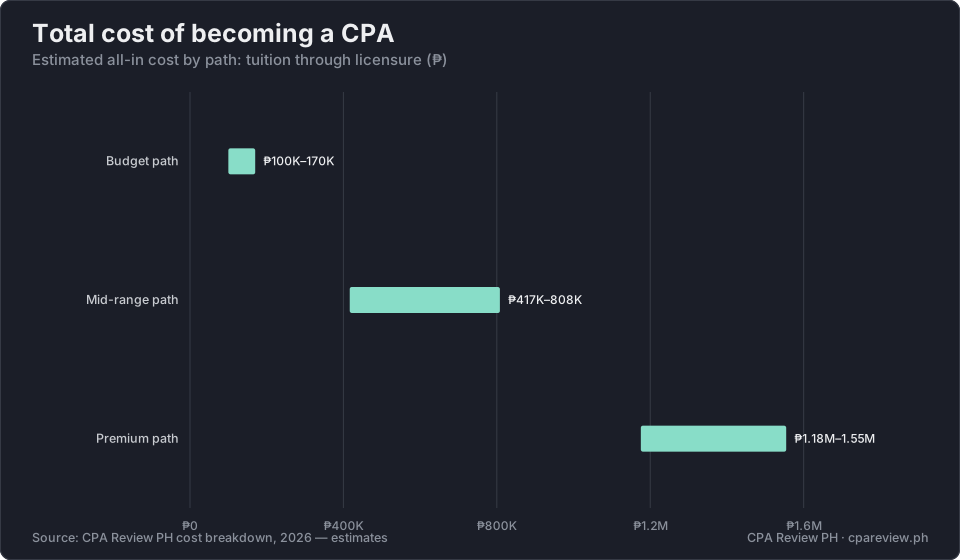
The cheapest credible path runs about ₱100,000–170,000; a premium private-school route can exceed ₱1.5 million. (All-in estimates: tuition through licensure.)
ROI Analysis: Is It Worth the Investment?
The short answer: Absolutely. Here's why:
Starting Salaries for CPAs (2026)
| Position | Monthly Salary Range |
|---|---|
| Junior Accountant (Entry Level) | PHP 19,000–25,000 |
| Staff Accountant (1–2 years) | PHP 25,000–35,000 |
| Senior Accountant (3–5 years) | PHP 40,000–60,000 |
| Accounting Supervisor | PHP 50,000–80,000 |
| Accounting Manager | PHP 80,000–150,000 |
| Finance Director/CFO | PHP 150,000–500,000+ |
Breaking Down the ROI
Scenario: Mid-Range Investment of PHP 600,000
- Entry-level salary: PHP 22,000/month (PHP 264,000/year)
- Non-CPA accounting graduate: PHP 15,000/month (PHP 180,000/year)
- Annual advantage: PHP 84,000
At this rate, your CPA license pays for itself in approximately 7 years—and that's just the beginning. As you advance in your career, the salary differential grows exponentially.
Additional Value of the CPA License:
- Job Security: CPAs are always in demand
- Career Flexibility: Public practice, private industry, government, academia
- International Recognition: Easier path to work abroad through ASEAN CPA
- Business Opportunities: Can sign audited financial statements
- Professional Prestige: Recognized expertise in finance and accounting
Money-Saving Tips for Aspiring CPAs
During College:
- Apply for scholarships - Many schools and organizations offer accounting scholarships
- Buy secondhand textbooks - Previous batch students often sell at 50% off
- Use university libraries - Access expensive reference materials for free
- Join accounting organizations - Access to free seminars and review materials
During Review Period:
- Form study groups - Share resources and split costs for supplementary materials
- Consider provincial review centers - Quality instruction at lower costs
- Explore online review options - Significant savings on living expenses
- Take advantage of early bird rates - Most review centers offer 10–20% discounts
- Use free online resources - YouTube lectures, free practice questions
Smart Financing Options:
- Education loans - SSS Educational Loan, bank education loans
- Work-study programs - Part-time accounting work during review
- Company sponsorship - Some firms sponsor employees' CPA review
The Digital Advantage: Modern CPA Review
Traditional review centers remain valuable, but technology now offers powerful supplementary tools:
Benefits of AI-Powered Review Platforms:
- Adaptive learning - Focus on your weak areas
- 24/7 availability - Study anytime, anywhere
- Instant feedback - Understand mistakes immediately
- Progress tracking - Monitor your improvement
- Cost-effective - Supplement traditional review at a fraction of the cost
Start Your CPA Journey Today
Becoming a CPA is more than an expense—it's an investment in your future. Whether you're taking the budget path through a state university or investing in a premium education, the returns far outweigh the costs.
Ready to maximize your chances of passing the CPA board exam?
At cpareview.ph, we offer an AI-powered review platform designed specifically for Filipino CPA candidates. Our adaptive learning system helps you:
- Focus on high-yield topics
- Practice with thousands of board exam-style questions
- Get instant AI tutoring support
- Track your progress across all 6 CPA subjects
- Study flexibly around your schedule
Start your free 7-day trial today and experience the future of CPA review. Your investment in becoming a CPA deserves the best preparation tools available.
Begin Your Free Trial at cpareview.ph
Frequently Asked Questions
Q: Can I become a CPA without spending a lot of money? A: Yes! By attending a public university (free tuition under RA 10931) and enrolling in an affordable provincial review center, you can become a CPA for under PHP 150,000.
Q: Is it worth spending more on a premium university? A: Premium universities often have higher passing rates and better industry connections. However, dedicated students from public universities also achieve excellent results. Your personal effort matters most.
Q: How long does the entire process take? A: The BSA program is typically 5 years, followed by 4–6 months of review, making the total journey approximately 5.5–6 years after high school.
Q: What if I fail the board exam? A: You can re-take for approximately PHP 951 per attempt (PHP 900 application fee + PHP 21 documentary stamp + PHP 30 mailing fee). Many successful CPAs passed on their second or third try. Consider supplementing with additional review resources like AI-powered platforms for subsequent attempts. Note that after failing twice, you will need to complete a refresher course (PHP 10,000-20,000+) before your third attempt.
Sources
- Republic Act No. 10931 - Universal Access to Quality Tertiary Education Act
- Professional Regulation Commission (PRC) - Schedule of Fees 2026
- Board of Accountancy Resolution No. 30, Series of 2022
- Philippine Statistics Authority - Labor Force Survey 2025
- JobStreet Philippines - Salary Guide 2025–2026
- Commission on Higher Education - List of Accredited BSA Programs
- Various university websites for tuition fee schedules