Passing the CPA board exam opens doors to diverse and rewarding career opportunities. As one of the Philippines' most respected professions, CPAs enjoy strong demand across industries, competitive salaries, and excellent growth potential.
The Value of a CPA License
Per RA 9298 (Philippine Accountancy Act of 2004), only licensed CPAs can:
- Sign audit reports and financial statements
- Practice public accountancy
- Represent clients before the BIR
- Serve as external auditors for SEC-registered companies
This legal monopoly on attestation services ensures steady demand for CPAs in the Philippines.
Major Career Paths for CPAs
1. Public Practice (External Auditing)
Working in audit firms, from Big 4 to local practices.
Career Progression:
| Position | Experience | Typical Salary Range |
|---|---|---|
| Staff Auditor | 0-2 years | ₱18,000 - ₱30,000/month |
| Senior Auditor | 2-4 years | ₱30,000 - ₱50,000/month |
| Audit Manager | 5-8 years | ₱60,000 - ₱120,000/month |
| Senior Manager | 8-12 years | ₱120,000 - ₱200,000/month |
| Partner | 12+ years | ₱300,000 - ₱1,000,000+/month |
Big 4 Firms in the Philippines:
- SGV & Co. (EY member)
- KPMG R.G. Manabat & Co.
- PwC Isla Lipana & Co.
- Deloitte Philippines
Pros:
- Excellent training and exposure
- Diverse industry experience
- Strong network building
- Clear career progression
- International opportunities
Cons:
- Long hours (especially during busy season: January-May)
- High pressure and tight deadlines
- Work-life balance challenges in early years
2. Private Industry (Corporate Accounting)
Working as in-house accountants for corporations.
Career Progression:
| Position | Experience | Typical Salary Range |
|---|---|---|
| Junior Accountant | 0-2 years | ₱18,000 - ₱28,000/month |
| Senior Accountant | 2-4 years | ₱28,000 - ₱45,000/month |
| Accounting Supervisor | 4-6 years | ₱45,000 - ₱70,000/month |
| Accounting Manager | 6-10 years | ₱70,000 - ₱120,000/month |
| Finance Manager | 8-12 years | ₱100,000 - ₱180,000/month |
| CFO/Finance Director | 15+ years | ₱200,000 - ₱500,000+/month |
Top Industries for Corporate CPAs:
- Banking and Financial Services
- BPO/Shared Services Centers
- Manufacturing
- Retail and FMCG
- Real Estate and Construction
- Telecommunications
Pros:
- Better work-life balance
- Stable hours
- Industry specialization
- Benefits packages often superior
- Less travel
Cons:
- Narrower exposure (one company/industry)
- May plateau without job changes
- Less structured career ladder
3. Government Service
Working in government agencies, GOCCs, or regulatory bodies.
Career Opportunities:
| Agency | Role |
|---|---|
| Bureau of Internal Revenue (BIR) | Revenue Officers, Examiners |
| Commission on Audit (COA) | State Auditors |
| Securities and Exchange Commission (SEC) | Accountant Specialists |
| Bangko Sentral ng Pilipinas (BSP) | Bank Examiners |
| Government-Owned Corporations | Internal Auditors, Accountants |
Government Salary Grades (per DBM Salary Standardization Law):
| Position Level | Salary Grade | Monthly Salary (2024) |
|---|---|---|
| Entry Level Accountant | SG 11-13 | ₱27,000 - ₱33,000 |
| Senior Accountant | SG 15-18 | ₱38,000 - ₱51,000 |
| Supervising Accountant | SG 19-22 | ₱55,000 - ₱80,000 |
| Chief Accountant | SG 24-26 | ₱100,000 - ₱150,000 |
Pros:
- Job security and stability
- Pension and retirement benefits
- Regular working hours
- Contribution to public service
- Various allowances
Cons:
- Lower base salary vs. private sector
- Bureaucratic processes
- Slower career advancement
- Limited income ceiling
4. Academia and Education
Teaching accounting in colleges and universities.
Requirements:
- CPA license
- Master's degree (for permanent position)
- Doctorate (for professorial rank)
Career Progression:
| Position | Typical Salary Range |
|---|---|
| Part-time Instructor | ₱300 - ₱600/hour |
| Full-time Instructor | ₱25,000 - ₱40,000/month |
| Assistant Professor | ₱40,000 - ₱60,000/month |
| Associate Professor | ₱60,000 - ₱80,000/month |
| Full Professor | ₱80,000 - ₱120,000/month |
Pros:
- Flexible schedule
- Academic breaks
- Intellectual fulfillment
- Can combine with practice
Cons:
- Lower compensation vs. industry
- Requires advanced degrees
- Research requirements for promotion
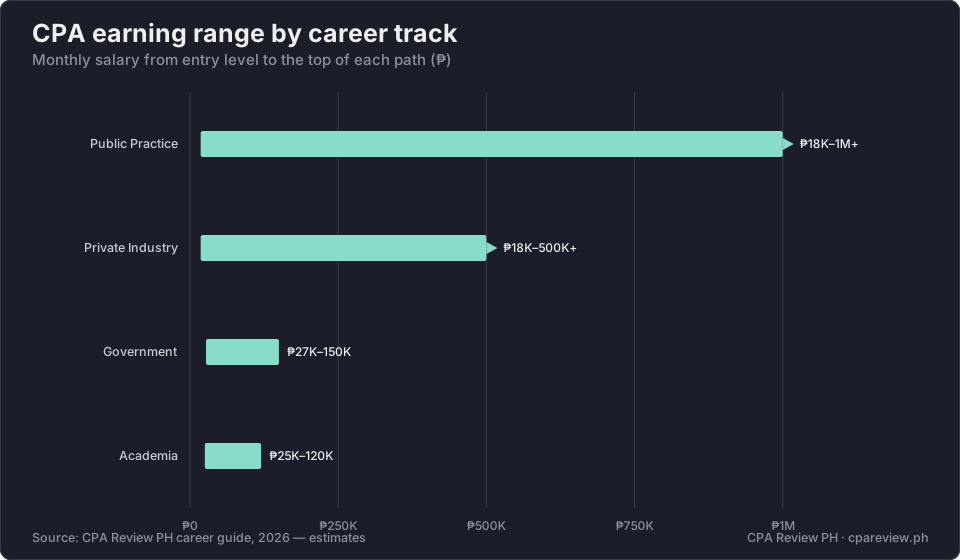
Every track starts near ₱18,000–27,000 a month; what differs is the ceiling — public-practice partners can reach seven figures. (Estimates.)
5. Entrepreneurship and Consulting
Starting your own practice or consulting firm.
Services CPAs Can Offer:
| Service | Typical Fee Range |
|---|---|
| Bookkeeping (monthly) | ₱5,000 - ₱30,000/month |
| Tax Compliance | ₱3,000 - ₱15,000/filing |
| Financial Statement Audit | ₱50,000 - ₱500,000/engagement |
| Business Consulting | ₱2,000 - ₱10,000/hour |
| Virtual CFO Services | ₱30,000 - ₱100,000/month |
Requirements per PRC:
- Certificate of Registration
- Professional Tax Receipt (PTR)
- BIR Registration
- Professional Identification Card
- Accreditation (for SEC/BSP work)
Pros:
- Unlimited income potential
- Flexibility and autonomy
- Build equity in your business
- Tax advantages as self-employed
Cons:
- Irregular income initially
- Need to build client base
- Business management responsibilities
- No employer benefits
Preparing for the CPALE?
When you start reviewing, the AI tutor and full question bank are free for seven days — no card.
Specialized Career Tracks
Forensic Accounting
Investigating financial fraud, embezzlement, and disputes.
Certifications that help:
- Certified Fraud Examiner (CFE)
- Certified in Financial Forensics (CFF)
Salary Range: ₱80,000 - ₱250,000/month
Employers: Law firms, consulting firms, government agencies (NBI, AMLC)
Internal Audit
Evaluating internal controls and risk management.
Certifications that help:
- Certified Internal Auditor (CIA)
- Certified Information Systems Auditor (CISA)
Salary Range: ₱50,000 - ₱200,000/month
Tax Consulting
Specializing in tax planning and compliance.
Common roles:
- Tax Associate/Senior at Big 4
- In-house Tax Manager
- Independent Tax Consultant
Salary Range: ₱40,000 - ₱250,000/month
Management Accounting
Focus on cost management, budgeting, and financial planning.
Certification that helps:
- Certified Management Accountant (CMA)
Salary Range: ₱50,000 - ₱180,000/month
Information Systems Audit
Auditing IT systems and cybersecurity controls.
Certifications that help:
- Certified Information Systems Auditor (CISA)
- Certified Information Security Manager (CISM)
Salary Range: ₱80,000 - ₱300,000/month
Salary by Industry
CPA pay varies widely by industry and experience. Here is a snapshot for mid-level CPAs (5–7 years):
| Industry | Average Monthly Salary |
|---|---|
| Banking / Financial Services | ₱80,000 - ₱120,000 |
| Public Practice (Big 4) | ₱70,000 - ₱110,000 |
Full salary breakdown: For pay by experience level, entry-level and Big 4 starting salaries, government salary grade, and overseas figures — with sources — see our dedicated CPA Salary Philippines 2026 guide.
Overseas Opportunities
Filipino CPAs are in demand globally, especially in:
Middle East:
- UAE, Saudi Arabia, Qatar
- Salary: USD 2,000 - 5,000/month (tax-free)
- High demand for audit and finance roles
Singapore:
- Competitive market but opportunities exist
- Salary: SGD 4,000 - 8,000/month
- CPA PH recognized for certain roles
Australia/New Zealand:
- Requires additional certification (CPA Australia, CA ANZ)
- Strong demand for skilled accountants
- Pathway to permanent residency
United States:
- May require additional US CPA credential
- High salaries but also high cost of living
Career Development Tips
For Fresh CPAs
- Consider Big 4 Experience - Even 2-3 years provides excellent training
- Get Exposure to Multiple Industries - Audit rotation helps identify interests
- Start Professional Networking - Join PICPA, attend industry events
- Pursue Additional Certifications - CIA, CMA, or CFA depending on career goals
For Mid-Career CPAs
- Specialize - Develop expertise in a niche area
- Build Leadership Skills - People management becomes critical
- Consider MBA - For executive track positions
- Expand Your Network - Industry connections open doors
For Senior CPAs
- Mentorship - Give back to the profession
- Board Positions - Serve on company boards as independent director
- Thought Leadership - Write, speak, contribute to the profession
- Exit Planning - Plan for retirement or business succession
The CPA Advantage
Beyond specific roles, a CPA license provides:
- Credibility: Instant professional recognition
- Versatility: Skills applicable across industries
- Stability: Accounting is always needed
- Growth: Continuous learning opportunities
- Income Potential: Higher earning capacity than non-CPAs
Your CPA Journey Starts Here
The first step to any CPA career is passing the board exam. Our platform helps you:
- Master all 6 subjects with AI-powered tutoring
- Build exam readiness with timed mock exams
- Track your progress across topics
- Get instant explanations for difficult concepts
Start your free trial and take the first step toward your CPA career.
Sources
- RA 9298 - Philippine Accountancy Act of 2004 - Scope of CPA practice
- PRC - Professional Regulation Commission - Licensing requirements
- DBM - Department of Budget and Management - Government salary standardization
- PICPA - Philippine Institute of Certified Public Accountants - Professional organization
- Industry salary surveys and job market data from JobStreet, Indeed, and LinkedIn Philippines
Salary figures are estimates based on 2024-2025 market data and may vary based on company, location, and individual qualifications. Last updated: January 2026.